How to Protect External Doors
A Metal Clad & Capped Door to a switchroom
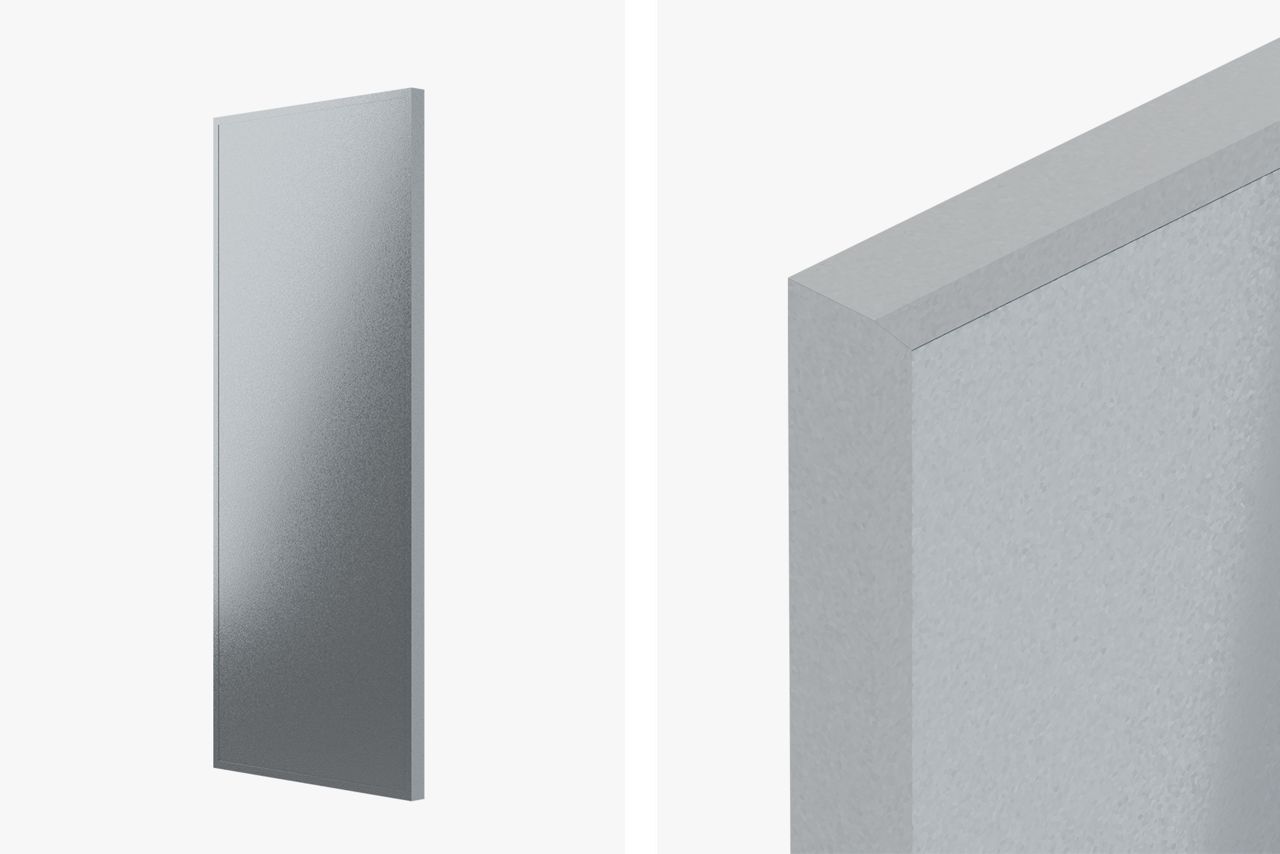
Metal faces with four-sided capping completely seals this door leaf from outdoor exposure.

There are several key elements in defining a door set’s suitability to outdoor application. Both the compositional properties of the door and the specifics of its installation setting must be considered. Here are the 3 important considerations before fitting an outdoors / exterior door set.
A Moisture-Resistant Skin
The door leaf ought to have skins that can withstand exposure to the elements. An appropriate skin will have moisture resistant properties to disallow the entry of moisture into the door leaf and degrading its timber composition. Exposure to moisture can be defined by proximity to the ocean or other body of water, or the natural rainfall and humidity conditions of the region. Irrespective of exposure level, all external door applications will have some amount of moisture to combat.
Medium Density Fibreboard (MDF) is not suited to such conditions as its makeup is prone to the acceptance of moisture. This contributes to its warping and deformation in outdoor conditions. This greatly decreases the lifespan of the door and expediates the need for replacement.
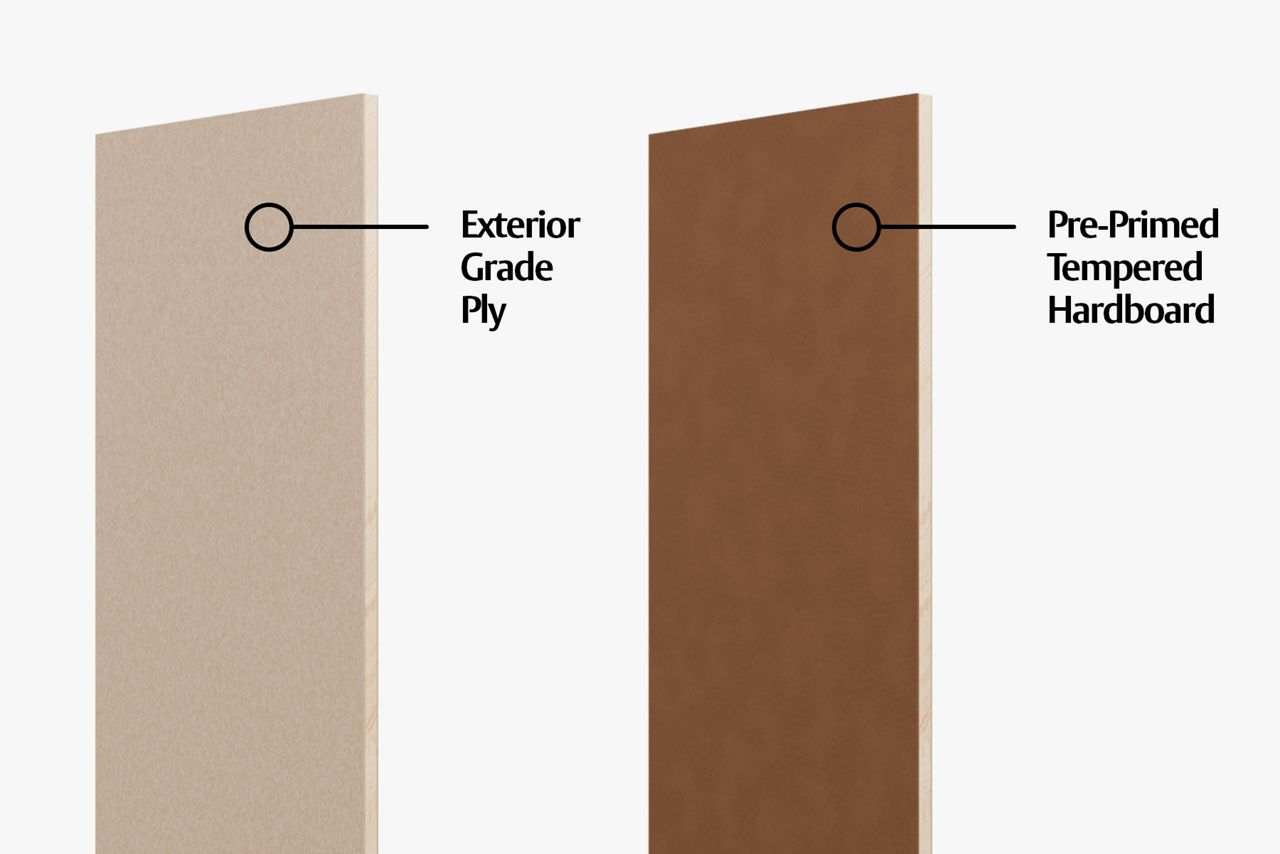
Conversely, Plywood and Tempered Hardboard are suitable for outdoor application under particular conditions. Certain grades of these timbers are resistant to moisture and are thereby conditionally able to withstand variable climate conditions. Regarding Ply, this is specifically in reference to an exterior-grade of plywood in accordance with AS 2271. Regarding Tempered Hardboard, this must be pre-primed for weather resistance. Even with the right skin however, these material properties are still subject to appropriate coverage over the door set - see below section on Overhead Protection. As suitability is dependent on installation, how these standards apply and which skin you should choose is specific to your door application. The Spence team is available to discuss this specification with you.
Cladding
The door leaf can be further protected with metal cladding. Metal faces protect the door’s skins by separating this surface area from direct exposure to the environment. However, this still leaves the edges exposed and so capping these edges is essential for appropriate protection and for coverage under Spence’s product warranty. This completely encases the door in a metal shell for a ‘wrapped and capped’ configuration where no element of the door leaf is exposed. When clad like this, the metal wrapping and capping acts as a weather seal. Metal capping permits installation without the necessity for overhead protection, something which is not possible with a non-cladded external door.
Overhead Protection
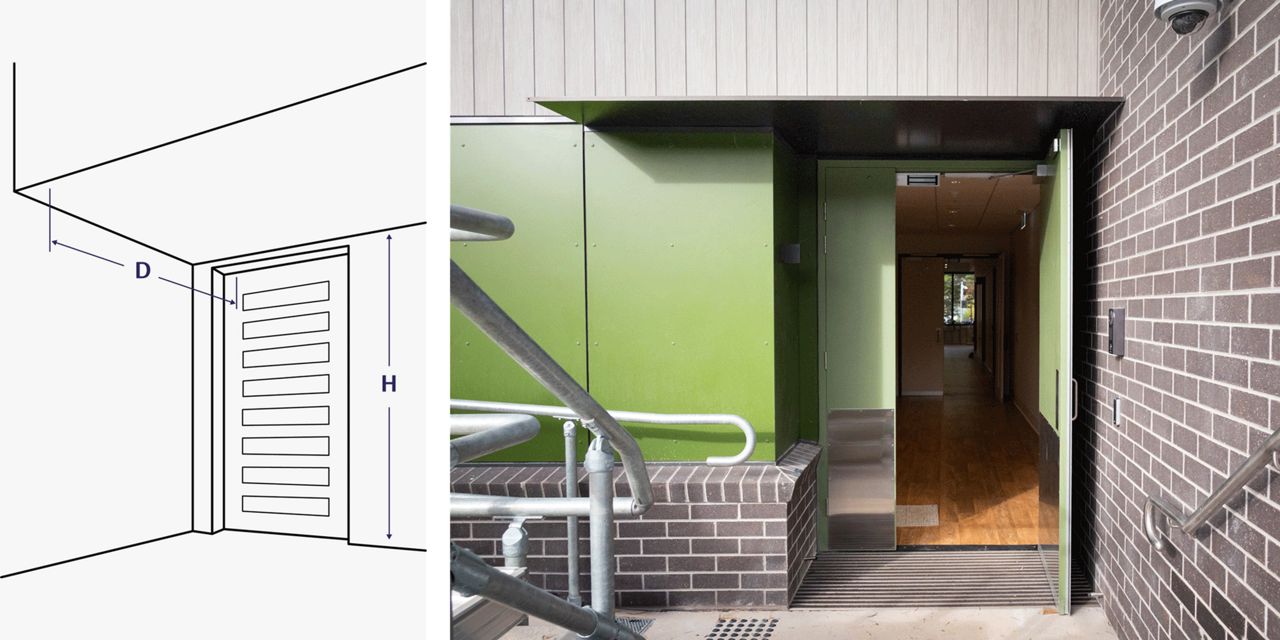
The compliant installation of external door sets is also subject to weather protection. Overhead protection is required to provide a safeguard against direct weather elements (ie. sun and rain exposure) in accordance with AS 2688. This applies to all classes of building as described in the NCC. The depth of overhead protection required is determined with consideration for the climate and door facing direction.
|
|
| Door Facing Direction | |||
|
|
| South | North | East | West |
| Climate | Coastal | D = H | D = H | D = 1/2H | D = H |
| Tropical | D = H | D = H | D = H | D = H | |
| Arid | D = H | D = H | D = H | D = 1.5H | |
| Mild | D = H | D = H | D = 1/2H | D = H | |
This information is derived from AS 2688:2017 Appendix A.
Environmental Considerations
The particular environmental conditions surrounding a doorset also need to be accounted for. As per AS2688:2017 Section 3:
- Application of paint finish is critical to doorset protection.
- Doorset performance (and potential for failure via warping, bowing, deterioration) is impacted by factors including heating, cooling, direct sunlight and exposure to moisture.
- External doorsets should be protected from driving rain ie. an overhead covering or awning.
- In addition to overhead protection, high-exposure environments may also require durable cladding– facing or fully encapsulating the door leaf to protect from environmental conditions.
Get in touch with the Spence team.
- A Moisture-Resistant Skin (AS 2271)
- Metal Cladding & Capping
- Overhead Protection (AS 2688)
Contact the Spence Doors team for assistance specific to your door set and project:
More Resources
- Guide
Stay Secure with COLORBOND® Steel Clad Doors
2026-08-25
- Guide
The Risks of Fire Bolts
2026-04-21
- Guide
What to Know When Specifying Doors for a Data Centre
2026-03-09
- Guide
Fire vs Smoke vs Non-Combustible Doors
2025-11-17
- Guide
How Fire Doors are Tested in the Lab
2025-11-10
- Guide
How to Protect External Doors
2025-08-27
- Guide
What to Know about Painting and Sealing Doors
2025-08-14


