Doors for Hospitality & Retail Projects
Doors built to visually stand out to customers, and to withstand the pressure of high-traffic. Custom production covers accessibility and sizing needs, and a selection of claddings make for enhanced durability and ease of cleaning.
Specification Checklist
- Low Maintenance - Doors built-for-purpose with minimal maintenance in mind. Once a store is open and active, having an inoperable doorway is costly to fix and extremely disruptive to customers and staff. This low-maintenace is achieved with an appropriately specified skin or cladding to absorb impact damage, and automatic opening/closing to minimise stress on the doorset.
- Aesthetics - A door's visual finish is key when it is in the direct eyeline of customers. This takes two forms; firstly, the availability of materials to deliver a doorset visually in alignment with the architectural / interior design vision for the space. Secondly, how well the aesthetic holds up over years of use as affected by physical attributes designed for minimising visual degradation.
- Durability - More than most doorsets and doorways, those in hospitality and retail settings have constant flows of people passing through. The subsequent stress of a door's function brings risks like its hardware not holding up, the faces taking impact damage, its structure bowing, or edges of its surface peeling. Accessories can enhance a door's durability to address these concerns.

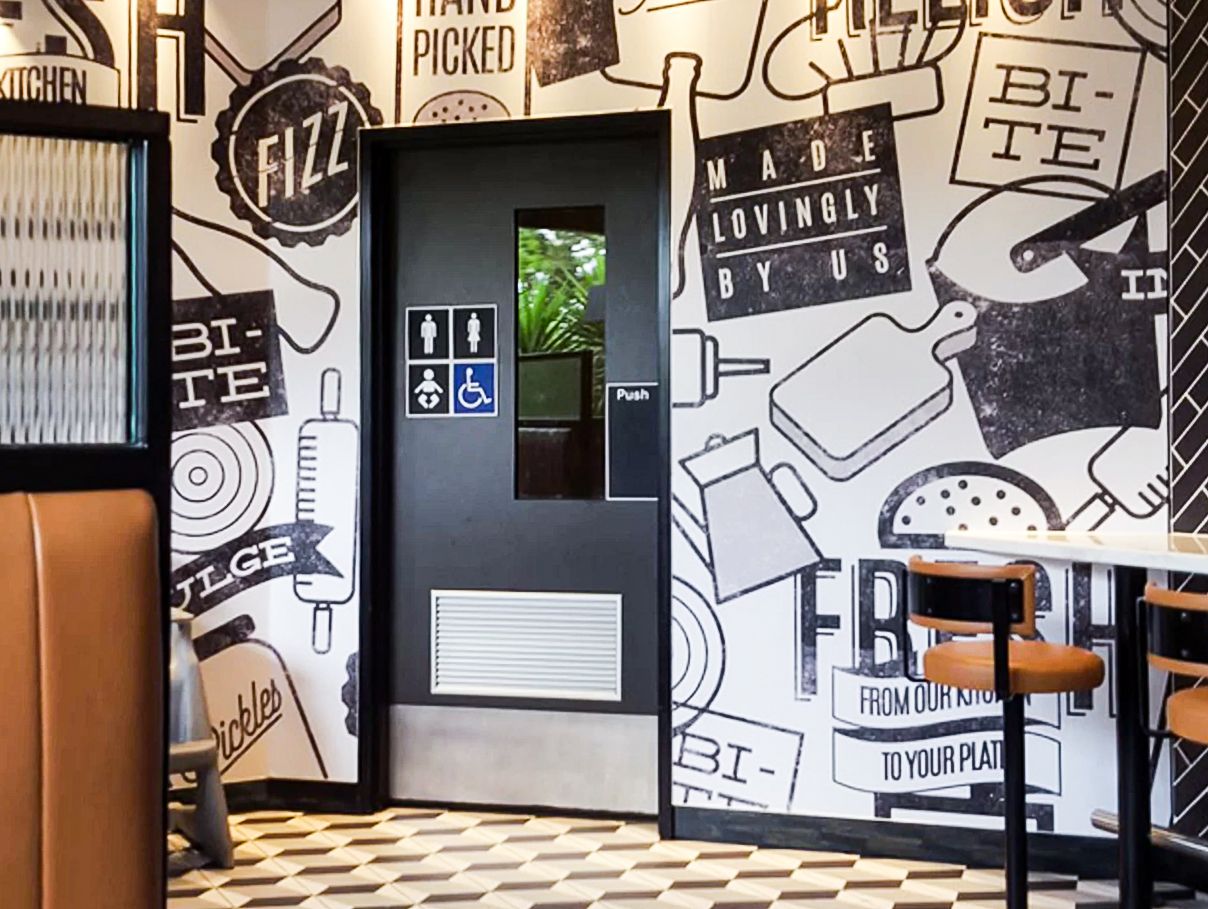
Doors Built for Minimal Maintenance
For retail and hospitality needs, the key is ultimately minimising maintenance. As high-traffic spaces under visual scrutiny, minimal time and labour should be dedicated to maintaining doors' function and aesthetics. Here are they key ways in which Spence Doors tailor doors to minimise day-to-day staff cleaning, cut down on professional maintenance needs, and keep disruptions to a minimum during operations once the store is open.
Laminated Surface
Making a door's face / surface low maintenance is achieved with a face cladding Laminates. Spence Doors source a laminate from a third-party supplier specific to project requirements. These laminates are adhered over a door leaf's skin by way of hot pressing. The result is a smooth surface substrate that is easily cleaned.
Fitted with Edge Strips
Minimising impact resistance is best achieved with Edge Strips. These PVC or timber strips are fitted to the door's vertical edges to safeguard from impact and prevent cladding (like a laminate or veneer) from edge damage.
Metal Framing
Custom Pressed Metal Frames are the ideal option for durability. Metal is typically a stronger material than timber so is the go-to option for instances where a doorset is expected to endure heavy foot traffic and corresponding risk of impact damage. Amongst metal frames options, available materials address varying levels of stregnth, budget, visuals as determined by project priorities. These include Zincanneal, Galvanized Steel and Stainless Steel in a variety of steel gauges and profiles.
Laminated Doors
Doors finished with a laminate for protective door face covering and a visually sleek finish. Laminates are a finished product that require no further preparation on-site.Veneer Clad Doors
Interior doors doors crafted to your specification with an extensive selection of attractive veneers adhered to the door skin.- Door Frames
Non Fire-Rated Metal Frames
Non-fire-rated frames manufactured from 1.2 mm zinc-coated steel versatile in wall thickness. - Door Protection
Edge Strips
Strips constructed from PVC or Timber to protect the door's edges.


Let's Work Together
We are here to help architects and builders bring projects to life and answer your questions to make it happen.

