Fire Ratings Explained

All fire doors are certified with a Fire Resistance Level (FRL) which signifies the fire-resistant performance as a dooset as part of a wall system. This is an overview of how to read these ratingsm how they are tested and calculated, and how it shapes specification.
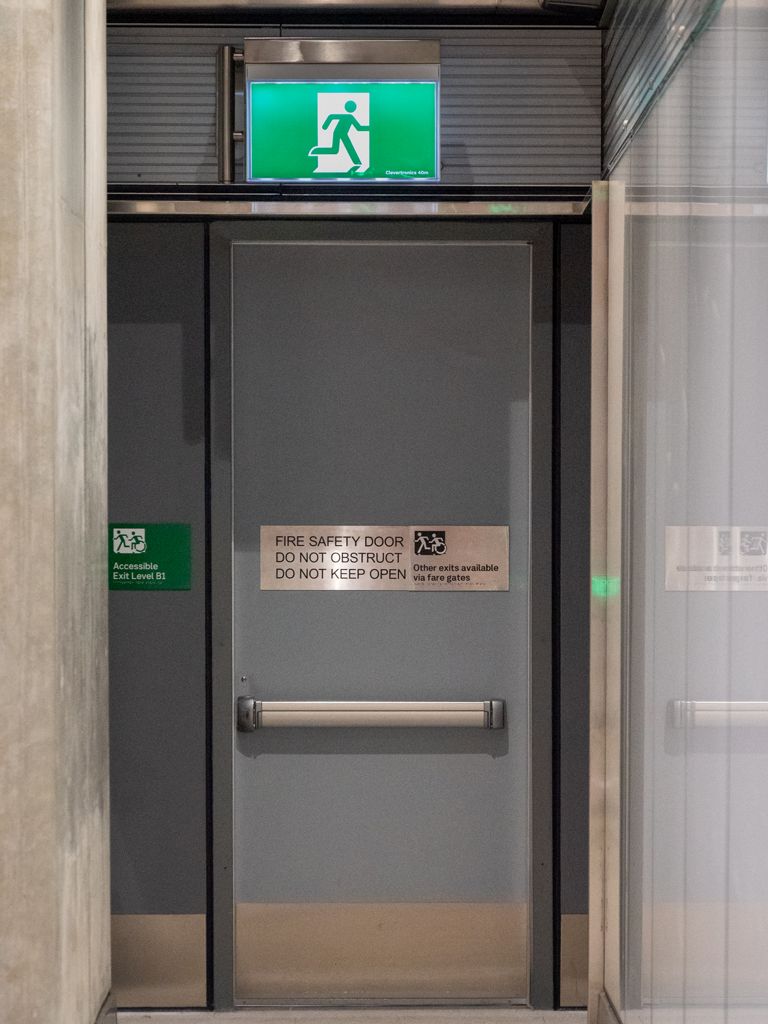
A 'fire-rating' is a result of indepdent testing by accredited authorities. The rating certifies, in accordance with Australian Standards, the extent to which a fire door provide passive fire protection to save lives & protect property.

Overview

Why We Need Fire Doors

A correctly specified fire door fulfils its purpose of passive fire protection by:

  • Preventing flame spread
  • Preventing transfer of excessive heat
  • Delaying fire spread to enable people to safely exit a burning building


When is a Fire-Rated Doorset Required?

  • Class 2 - Apartment Buildings
  • Class 3 - Common Buildings (ie. Hostel, Boarding House, Workers' Quarters)
  • Class 4 - Residential Part of a Non-Residential Building (ie. Caretaker's residence in a strorage facility)
  • Class 5 - Office Buildings
  • Class 6 - Commercial / Retail Buildings (ie. Shope, Restaurants, Cafes)
  • Class 7 - Storage-Type Buildings (ie. Carparks, Warehouses, Wholesale Facilities)
  • Class 8 - Factories
  • Class 9 - Public Buildings (ie. Hospitals, Residential Care, Assembly Spaces like Schools, Theatres, Churches, Sports Club Buildings)


Where is a Fire-Rated Doorset Required?

  1. Compartments eg: Apartments entry, stairs, corridors
  2. Where there is an opening in a Fire-rated wall
  3. Wherever specified by the Fire Engineer

Testing

Who Holds Testing?

A 'fire-rating' is a result of testing by a NATA (National Association of Testing Authorities) or TELARC SAI (Testing Laboratory Registration Council) accredited authority indepenent of a door supplier. This rating certifies, in accordance with Australian Standards, the extent to which a fire door provide passive fire protection to save lives & protect property.

What does the Test Involve?

The test itself is designed to mimic a real-life fire situation in a building and determine how long the doorset can withstand direct exposure to fire. The complete doorset (door leaf, door frame, door hardware) is installed into a wall inside a furnace. Within this furnace, the door is exposed to an open fire on one side of the wall until the fire escapes through to the opposite side. Inspectors record heat transfer through the door/wall, and visually verify warping or bowing in the door leaf. How long the door lasts before fire penetrates the doorset through to the opposite side becomes the Fire-Resistance Level. This is the time period over which the doorset and wall have served their purpose as a fire-resistant barrier. This time is rounded down to the closest 30-minute increment that the door passed – 30 minutes, 60 minutes, 90 minutes, 120 minutes and so on. See more information on this process here.

Fire Resistance Level

Now with an understanding of what a fire-resistant doorset is and how it is tested, we can understand how the subsequent Fire Resistance Level (FRL) is determined. All correctly specified fire doors are supplied along with Fire Tags verifying its FRL.

AS1530.4

This Australian Standard designated a Fire Resistance Level (FRL) rating for Fire doors. This provides  building designers, manufacturers, test laboratories, and regulatory authorities with the uniform requirement for:

  1. Heating conditions  when conducting  a  test.
  2. Testing procedures.
  3. Criteria  for  determining  fire resistance  ratings  of  a  building material used to construct a building.

FRL is the nominal grading period  defined in minutes that is achieved during exposure to the standard time temperature curve regime( as per graph) set in AS1530.4. Under 1530.4 the FRL specifies the building elements in the following order:

  • Structural Adequacy (Relates to structural walls, not a door consideration)
  • Integrity (Protection from flame / gas penetration). This is the figure referred to when stating a door's 'fire-rating' eg. 120 minutes of integrity for a 2-Hour Fire Door means that the middle figure of the three will state 120 (see below image).
  • Insulation rating in minutes (Heat transfer to non-fire side surface / safe passage side)


Limitations

A fire-doorset passing necessary testing is only applicable to the specific configuration of the tested doorset. This affects two components of the doorset - compatible hardware and overall sizing.

Hardware Compatibility

The hardware installed on a doorset during the burn test are proven to be compatible as part of the over system. These hardware models cannot be swapped out for models that have not be together altogether with that specific doorset configuration, unless otherwise approved by authorities. As such, hardware specification can become quite limited relative to a standard non-rated door as specification is beholden to tested / compatible hardware lists. Spence Doors' fire doorsets have one of the largest databases of tested compatible hardware on the Australian market.

Size Limitations

A burn tested completed on a 2700mm high door permits the specification of this doorsets for any height up to 2700mm. Beyond this height however, even if no further changes are made in terms of hardware, thickness, etc. it cannot be certified as testing has not proven the doorset for performance above this height. This same principle applies to door with as all overall dimenstions are subject to tested and proven size limitations. Subject to testing reports and advice from authorities, there are allowances for additional hardware like Transom or Mullion frame component which host an overlight or sidelight and extend the doorset in that capacity.

Part of a Wall System

A door on its own will not prevent the spread of fire.  It isn’t until we combine all parts from the wall to the jamb, door and fittings that the “set” will slow down the spread of fire. A ‘fire-rated doorset’ is the sum of its parts. This includes the door leaf (containing a fire-rated core) + frame/jamb + all items that are fixed to the door.

This goes beyond the doorset itelf into consideration of the wall. Ultimately, the doorset is a component within a wall system, and thereby a part of the wall system. A fire doorset is given a fire-rating in conjunction with the wall type is was tested within, the doorset is a not a complete fire-resistant barrier without a compatible wall system. A Fire Engineer will approve or deny a building's fire standards with this principle that a fire doorset's integrity rating matches the wall fire rating.

National Construction Code

The makeup of a fire doorset, its installation, and its maintenance are all subject to upholding Australian Standards outlined in the National Construction Code (NCC). Below are a number of important standards and guidelines to follow:

NCC Section C

Regarding Fire Resistance, the Objective of Parts C1, C2, C3 and C4 is to:

  1. Safeguard people from illness or injury due to a fire in a building
  2. Safeguard occupants from illness or injury while evacuating a building during a fire
  3. Facilitate the activities of emergency services personnel
  4. Avoid the spread of fire between buildings
  5. Protect other property from physical damage caused by structural failure of a building as a result of fire.

NCC Specification 12

A required fire door must:

  1. Comply with AS 1905.1; and
  2. Not fail by radiation through any glazed part during the period specified for integrity in the required FRL.


See more important Australian Standards here.

The Role & Risks of Fire Bolts

What is a Fire Bolt?

Many door suppliers resort to the use of fire bolts in fire doorsets in order to pass testing. This is a metal bolt fitted into a door's frame which, when exposed to extreme heat in the event of a fire, activates into a cavity. This fixes the door and frame together to deter warping / deformation of the door. The intended purpose of the fire bolt is to maintain the integrity of a doorset as a fire-resistant barrier.

Why is it a Concern?

It is important to note that once the fire bolt is activated, the door is fixed shut. This creates a barrier to entry for the fire department to gain access for safe handling of the fire and safe evacuation of any remaining occupants.

  1. Primarily, this poses a major safety concern for the safe egress of all occupants in protecting their health and safety.
  2. Secondly, it complicates the liability of the facility owners / managers and whether they have taken all necessary measures to ensure their facility is safe.
  3. Thirdly, incidental triggering of the fire bolt creates significant expense as the door and jamb are difficult to remove from this point.

Spence Doors' Fire Doorsets

Spence Doors offer a range of fire doorsets varied by size, configuration, and rating. The range includes single and pair doors, as well as acoustic and smoke options.

More Resources

  • Guide

    Fire vs Smoke vs Non-Combustible Doors

    2025-11-17

  • A Spence fire door tag for 2-hours of fire resistance
    Guide

    How Fire Doors are Tested in the Lab

    2025-11-10

  • An outdoors metal clad and capped door to a switchroom
    Guide

    How to Protect External Doors

    2025-08-27

  • Person painting an undercoat on a door
    Guide

    What to Know about Painting and Sealing Doors

    2025-08-14

  • Palleted door stack in factory
    Guide

    The Essentials of Door Storage

    2025-07-10

  • Metal and Timber Door Frames
    Guide

    Choosing the Right Frame for a Fire Door

    2025-05-28

  • Man in hard hat inspecting door for damage
    Guide

    Facts About Bowing of Doors

    2024-12-18